
Part 1: The Hidden Architecture of Power
Every organization is a map of how power flows.
Before titles, before managers and CEOs, human beings cooperated. We hunted together, raised children together, built shelters together. We shared food and made decisions by listening to one another.
While the instinct to dominate was still present, groups pushed back against those who would hoard too much or oppress too heavily.
Early humans lived in egalitarian bands for hundreds of thousands of years. Cooperation and sharing were our default settings until surplus and ownership entered the picture.
While we consider feudalism an unenlightened, oppressive model, the modern corporation is no better.
A C-corp is, at its core, a soulless machine designed to convert human effort into shareholder value. Its hierarchy is an operating system for efficient extraction. By design, it’s indifferent to meaning and the lives of those whose labor ensures its existence. The people who would push back against too much greed or inhumanity have no voice in a C-corp.
The C-corp is a structure optimized for tyranny and accumulation.
This is not a matter of bad people. It’s a matter of architecture. Even the most well-intentioned leaders are trapped in structures that reward short-term profit and concentration of power over the long-term care of the organization and the humans within it.
When compassion conflicts with quarterly returns, the system decides which survives.(Hint: it won’t be compassion).
If we want to build technology that protects what’s sacred and operates in a truly ethical way, we can’t just write better code. We have to rewrite the architecture of power itself.
Because if the problem is structural, the solution must be structural too. Society needs new technology companies structured nothing like the fossilized remains of today’s tech ventures operating at peak greed and inhumanity.
In the next part, we’ll explore why the legal operating systems of C-corps are fundamentally incompatible with the values of psychotherapy.

Part 2: The Soul of Psychotherapy
A psychotherapist’s duty is to care for one human being at a time while adhering to an ethical code.
A corporation’s duty is to maximize profit for the people who own its shares.
Those two aims are irreconcilable.
In psychotherapy, we don’t treat people as symptoms or isolated selves. We treat them as souls living within systems that can either nurture or deform them. When systems become dehumanizing, people begin to bend in unnatural ways. They contort themselves to survive inside structures built for profit and power, not for life and certainly not for love.
The ethical core of psychotherapy rests on six principles: beneficence, justice, autonomy, fidelity, nonmaleficence, and veracity. Each demands something corporate systems cannot give.
- Beneficence becomes enrichment for a few.
- Justice becomes hierarchy.
- Autonomy becomes tyranny.
- Fidelity becomes marketing.
- Nonmaleficence becomes whatever serves power.
- Veracity becomes spin and distortion.
When the C-corp enters the psychotherapy space, its imperatives invert ours. The sacred human moment becomes inefficiency. The rich inner life that psychotherapists refuse to commodify becomes a dataset.
C-corp tools betray us: built for profit, not healing, they turn therapists into data clerks and clients into data sources. I once believed this could be fixed with better design, better UX, better values, better leaders.
But eventually I saw the truth that the structure itself is the infection.
When the architecture of a system is built for extraction and concentration of power, no amount of ethical intention can make it humane. And as we all can see, the structure rewards those most willing to exploit it.
That’s why I’m building something different, a structure designed to work for the humans within it, not the other way around.
Those who join me will help build a software company encoded at the legal level with the same ethics that guide the therapy room.
These are not mere slogans. They are the operating system of what’s coming next, a business whose legal structure is crafted as a work of art in itself.
Next, we’ll explore how to design an organization whose very legal DNA aligns with the spirit of psychotherapy.
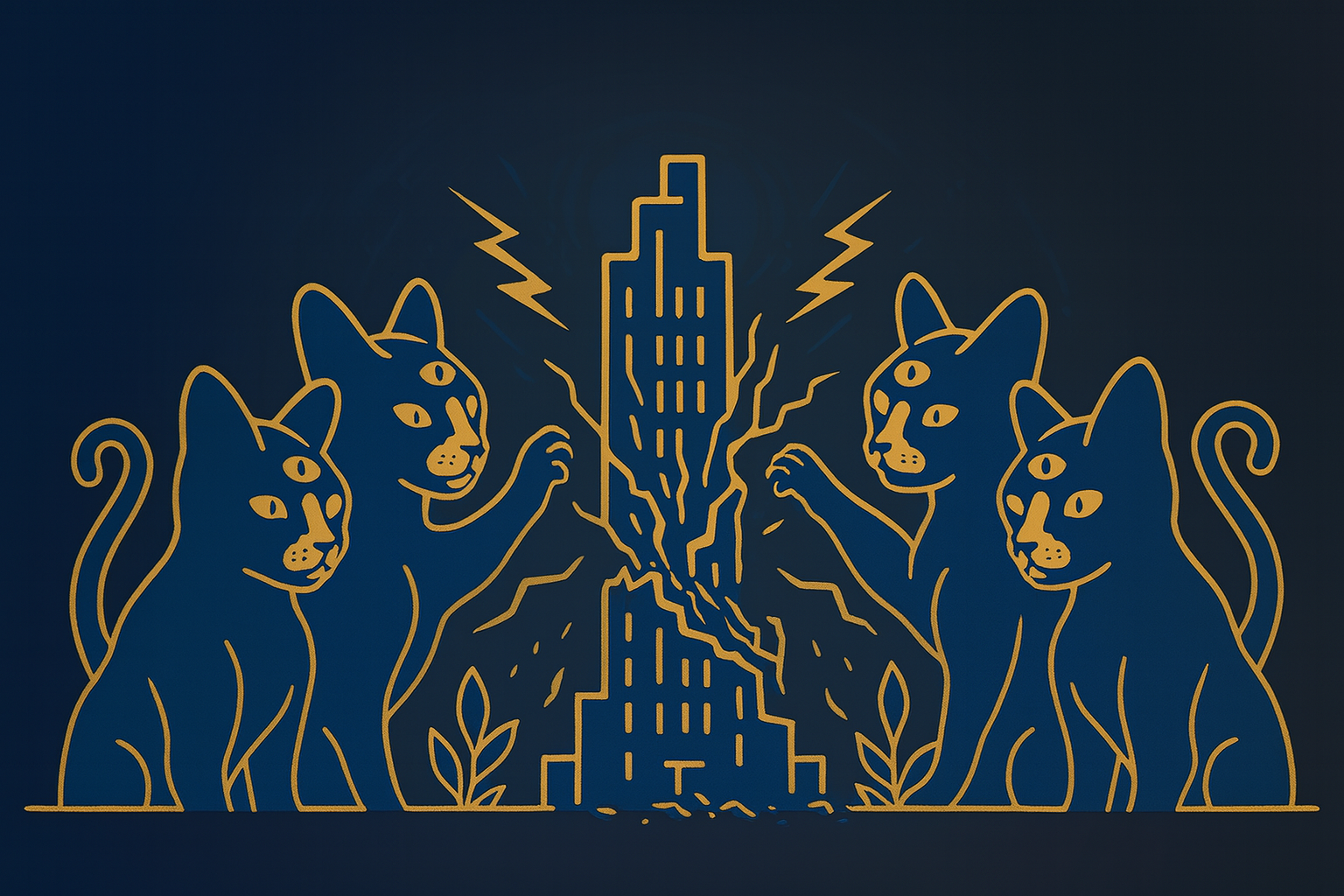
Part 3: Designing an Organization Like a Therapy Room
A therapy room works because it’s a space of trust. In therapy, trust isn’t a buzzword — it’s the air everything else breathes. There are boundaries, yes, but they exist to protect freedom, not to restrict it. The room is not ruled by hierarchy; it’s guided by presence, accountability, and care.
When I began dreaming my next dream, I wanted to carry the deeply ethical spirit of the psychotherapy room into the structure of the company itself.
And so I did.
I asked a question as a thought experiment:
How does one craft the legal structure of a company as a work of art?
More questions followed…
- Can the art be influential enough to create a mutation of the architectures of domination, greed and exploitation that have underpinned the fantasies of many in business since feudalism?
- How can the existing incorporation options be pushed in a way so that the structures support the deepest ethics of psychotherapy instead of bringing out the depths of corruption and darkest parts of the human heart?
While I don’t have answers to most of those questions, here’s the main elements that arose…
Worker’s Trust
The organization must be owned by the people who do the work. When there’s no external shareholders, there’s no extraction. There’s no selling to venture capital or anyone who isn’t a worker.
100% of the company must be held in trust by the people who build and sustain it. Ownership then becomes stewardship, not entitlement.
Federated Democratic Governance
Decisions flow from consent and dialogue, not command and compliance. When everyone working in the company owns the company, people are more engaged.
Leadership is rotational, situational, and earned through contribution, not title. Instead of top-down decision making, elected delegates come together to agree on strategy and solutions to company problems.
Mission Lock
The company’s charter binds everyone to one purpose. Instead of incorporating as a C-corp, the ideal legal structure for extraction and hierarchical control, we've incorporated as a Public Benefit Corporation. The stewards of the company then have more leeway to pursue objectives beyond pure profit while still able to create profits for everyone in the company. This empowers us to protect human dignity in the systems we create. The purpose articulated in the articles of incorporation are written into the bones of the organization.
This isn’t idealism. It’s the same human realism of collaboration and organic coordination that led us through hundreds of thousands of years. Because the same principles that make therapy work — deep listening, shared responsibility, and authentic dialogue — are the same principles that make human cooperation work.
As Noam Chomsky once said, freedom isn’t the absence of structure; it’s structure aligned with justice.
That’s what I aim to build — not a startup, but a living system designed to stay aligned with the human beings inside it.
If therapy offers a sacred space for the individual, what’s coming next aims to offer one for those highly attuned, perceptive creatives with the drive and energy to dare wade into the unknown.
Next, we’ll paint a picture of what this means for the future — not just for therapists, but for how we build technology that stays human.

Part 4: Building for the Long After
In the tech world, “success” is usually measured by exit rather than impact. Companies are grown like crops of speculation, harvested for acquisition, and replanted as something unrecognizable. The human beings inside them are treated like seasonal labor.
But there’s another way, a more human way to build.
We’re building what you could call a technology company for the human spirit. It’s software that can’t be sold to the highest bidder because it’s owned collectively by the workers and bound by mission. It’s software designed not to extract from human relationships, but to protect them.
In this model, democratic ownership isn’t anti-business. It’s the next evolution of responsibility.
It recognizes that the people who build and use a system are the ones who should benefit from it, not distant shareholders or speculative markets.
We’re not rejecting commerce; we’re rebalancing it.
We’re not dismantling the architecture; we’re re-rooting it in care and dignity.
Healing can’t happen in systems built on domination. And psychotherapy’s essence is the opposite of domination. It’s the practice of meeting another human being without trying to control them.
That’s the spirit we want to see echoed by this company being built, our culture, and in our tools and services.
We’re building for the long after, for a time when technology might once again serve the fragile, complex, sacred fabric of human life.
Most of us feel uneasy with how the world’s built, so maybe it’s time we rebuild it with the smallest of steps, with the smallest pebbles dropped into the water.
If you feel like this is an organization you'd like to join, visit our page here.

These reflections express our opinions on systemic issues in psychotherapy and technology, not on any specific organization or individual.